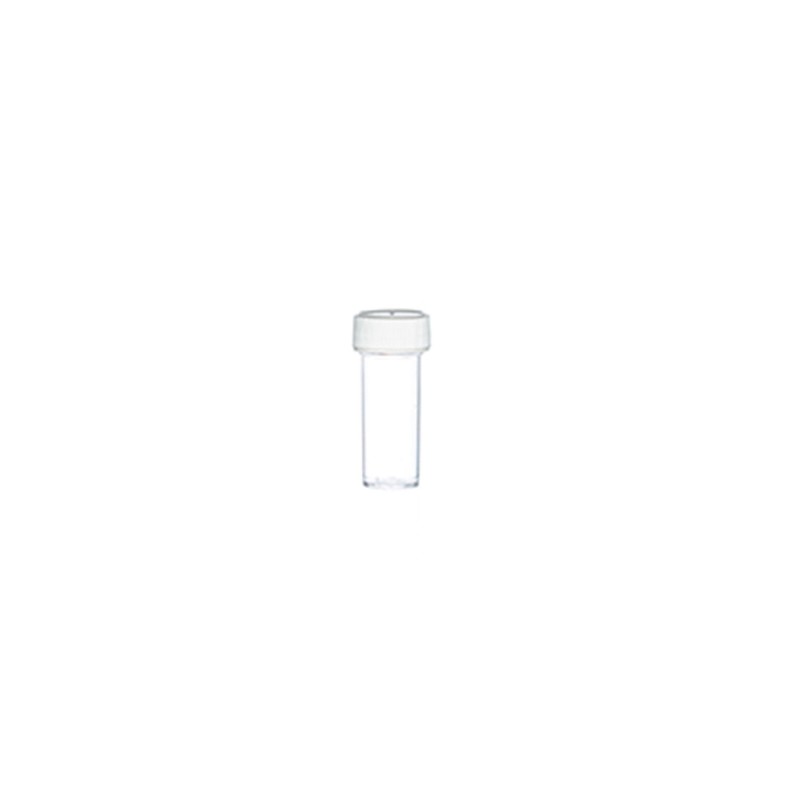
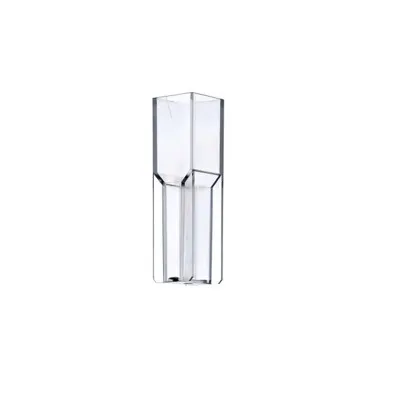
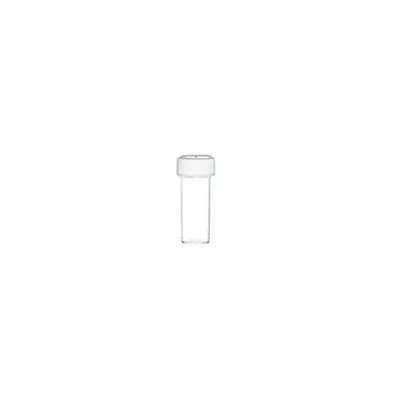
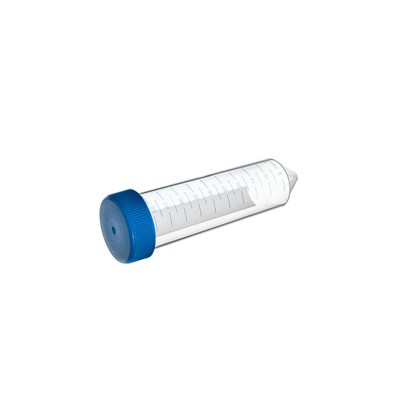
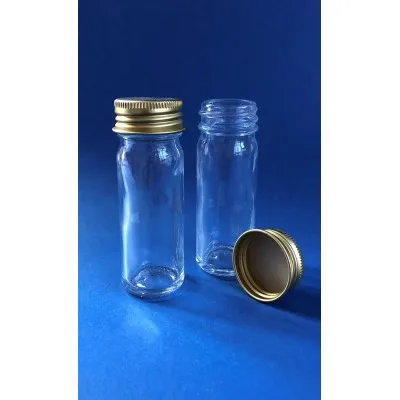
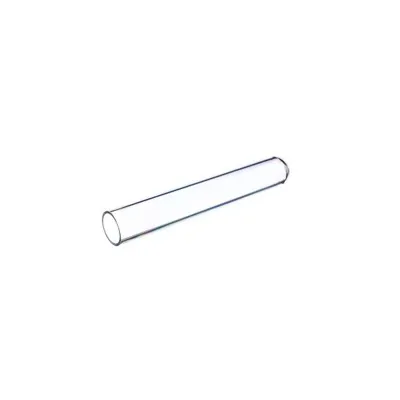
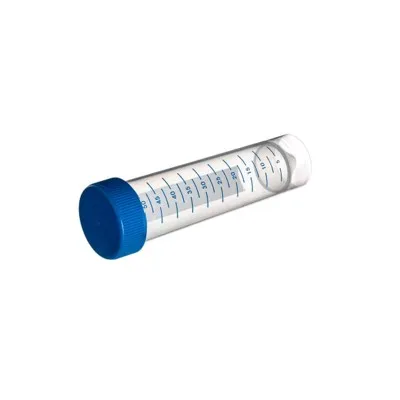
7ml Bijou Container (no label)

Greiner Bio-One

7ml Bijou Container (no label)

Quantity

  • 7ml Bijou container
  • No label
  • Non-sterile
  • Quantity per bag: 700
Go to Product Description

ASK A QUESTION

Please fill in the form below to ask a question about this product:

  100% Secure Shopping

100% Secure Shopping & Payment Gateway

  Express Delivery

We aim to ship all stocked items within 1-3 working days.

  Hassle Free Returns

Not 100% happy with your order? find out more about our returns policy.

  • 7ml Bijou container
  • No label
  • Non-sterile
  • Quantity per bag: 700
G189170

Our standard delivery is 3-5 working days (where products are available) Monday to Friday, excluding public holidays when you order by 2pm. Details of our returns and cancellation policy can be found in our Returns Policy & Section 11 of our Terms and Conditions. For more information please contact us on 01924 444 577 or Email Us.

16 other products in the same category:

WL Nutrient Agar

£340.62 vat excl.

£408.74 vat Inc.

Availability: Out of stock
W-L Nutrient Agar is used for the cultivation of yeasts, molds, and bacteria encountered in brewing and industrial fermentations. W-L Nutrient Agar is not intended for use in the diagnosis of disease or other conditions in humans. W-L Nutrient Medium was developed by Green and Gray while studying various fermentation processes. An exhaustive study examining methods of fermentation control procedures in worts, beers, liquid yeasts and similar fermentation products led to the development of W-L Nutrient Medium. At a pH of 5.5, counts of viable baker’s yeast will grow on W-L Nutrient Medium. W-L Nutrient Medium is also referred to as “Wallerstein Laboratory Medium”.

Tryptone Soy Broth

£1,761.18 vat excl.

£2,113.42 vat Inc.

Availability: Out of stock
Tryptone Soy Broth (TSB) is a general-purpose broth which will support the growth of a wide range of micro-organisms and is not intended for use in the diagnosis of disease or other conditions in humans. Tryptic Soy Broth, a general purpose medium, is commonly referred to as Casein Soya Bean or Soybean- Casein Digest Broth, and abbreviated as TSB. This medium was originally developed for use without blood in determining the effectiveness of sulfonamides against pneumococci and other organisms. Clostridia and non-sporulating anaerobes grow luxuriantly in this broth when incubated under anaerobic conditions. TSB is recommended for testing bacterial contaminants in cosmetics and complies with established standards in the food industry. Enzymatic Digest of Casein and Enzymatic Digest of Soybean Meal are nitrogen sources in TSB. Dextrose is the carbon energy source that facilitates organism growth. Sodium Chloride maintains osmotic balance; Dipotassium Phosphate is a buffering agent. For Casein Soya Bean Digest Broth QC tested according to the USP/EP/JP methodology and requirements, please use NCM0004.

TT2 CLED and MacConkey (w/o salt) Agar Dipslides

£11.69 vat excl.

£14.03 vat Inc.

Availability: 34 In Stock
  • Slide Format: Large Pushfit
  • Agar (Side 1): Cled
  • Detection (Side 1): Total Count 
  • Agar (Side 2): Mac Conkey W/O Salt
  • Detection (Side 2): Coliforms
  • Shelf Life: 9 Months
  • Storage Temp.: 8 - 15 ℃
  • Incubation: 35 ℃ - 24 - 48 Hrs
  • 10 Dipslides per box
  • Minimum Order Quantity: 50 box
Availability: Out of stock

Lauryl Tryptose (LST) Broth is used for the detection of coliform bacteria in water and wastewater. Lauryl Tryptose Broth is not intended for use in the diagnosis of disease or other conditions in humans. Lauryl Tryptose Broth is a selective medium for the detection of coliforms in water, dairy products and other foods. The American Public Health Authority (APHA) recommend Lauryl Tryptose Broth for the Most Probable Number Presumptive Test of coliforms in waters, effluent or sewage and as a confirmation test of lactose fermentation with gas production from milk samples and for the detection of coliforms in foods. Lauryl Tryptose Broth is prepared according to the formulation of Mallmann and Darby. Mallmann and Darby showed that tryptose at a concentration of 2% increased the early logarithmic growth phase when compared to meat peptone.

These researchers added phosphate buffers and sodium chloride, which improved gas production by "slow lactose fermenting" organisms. Sodium lauryl sulfate was incorporated as a selective agent for the inhibition of non-coliform organisms. This medium can also be used with the addition of MUG (4- methylumbelliferyl-β-D-glucuronide) according to the ISO Standard 11866-2 to give enhanced detection of Escherichia coli.

Availability: Out of stock
Perfringens Agar Base (TSC) is used with selective and differential supplements for the recovery of Clostridium perfringens, and is not intended for use in the diagnosis of disease or other conditions in humans. Formulated according to ISO 14189:2013, Perfringens Agar Base (TSC) is a nutritious base medium used in the preparation of SFP Agar and TSC Agar. Depending upon the formula, supplements are added to increase the selectivity of the medium. Shahidi-Ferguson Perfringens (SFP) Agar is based on the formula by Shahidi and Ferguson and incorporates the supplements, Polymyxin B Sulfate and Kanamycin. Tryptose Sulphite Cycloserine (TSC) Agar is developed with the same base as SFP Agar, with the addition of Cycloserine. If desired, Egg Yolk Emulsion can be added to either formula.
Availability: Out of stock
Yersinia Selective Agar is used with cefsulodin and novobiocin for the isolation of Yersinia enterocolitica in a laboratory setting. Yersinia Selective Agar is not intended for use in the diagnosis of disease or other conditions in humans. This medium is based on the work of Schiemann. It is used for the isolation and enumeration of Yersinia spp. from clinical samples and from food. The selective components are sodium desoxycholate, crystal violet, cefsulodin, irgasan and novobiocin. Yersiniae ferment mannitol with an intense, localized, acid production in the center of the colony which produces a red ‘bull’s eye’ appearance. The ratio of transparent border to red centre varies with serotype and environmental strains may appear rough with an irregular edge. Most other enteric bacteria, if they grow, produce a larger colony with a diffuse pinkish center and opaque outer zone.
Availability: Out of stock
MacConkey Agar without Crystal Violet is used for the isolation and differentiation of Gram-negative enteric bacilli and is not intended for use in the diagnosis of disease or other conditions in humans. A selective medium for the isolation of bile tolerant organisms from sewage and foodstuffs. Bile-tolerant Gram positive organisms as well as Gram negative organisms will grow on this medium. This formula is recommended by W.H.O. and other bodies for the examination of water and milk. Some strains of Proteus spp. will spread on this medium making interpretation difficult, for this reason MacConkey Agar (without salt) may be preferred as it is less prone to this phenomenon.
Availability: Out of stock
Dermatophyte Test Medium is used for the selective isolation of dermatophytic fungi and is not intended for use in the diagnosis of disease or other conditions in humans. In 1969, Taplin et al. developed this medium for the isolation and recognition of dermatophytic fungi, the causative agent of ringworm from hair, nails, and skin. Dermatophyte Test Medium is preferred for isolation and early recognition of Microsporum, Trichophyton, and Epidermophyton genera because of a distinct color change in the medium. Rapidly-growing species may produce a complete color change in the medium in 3 days. The slower-growing species will change the indicator in longer time periods. Other organisms may grow but can be recognized as non-dermatophytes by lack of a color change. A few organisms, including saprophytes, yeasts, and bacteria are capable of changing the medium from red to yellow, but are easily recognized by their distinctive colonial morphology.

BV Baird Parker and VRBG Agar Dipslides

£10.09 vat excl.

£12.11 vat Inc.

Availability: 46 In Stock
  • Slide Format: Large Pushfit
  • Agar (Side 1): Baird Parker
  • Detection (Side 1): Staphylococci
  • Agar (Side 2): VRBGA
  • Detection (Side 2): Enterobacteriacea
  • Shelf Life: 9 Months
  • Storage Temp.: 8 - 15 C
  • Incubation: 35 C - 24 - 48 Hrs
  • 10 Dipslides per box
  • Minimum Order Quantity: 1 box