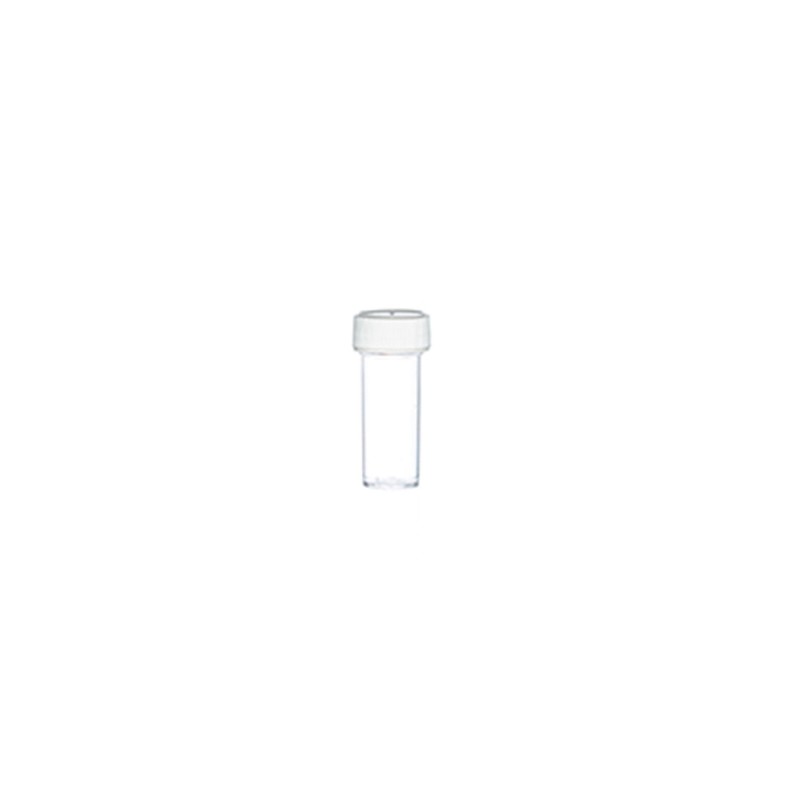
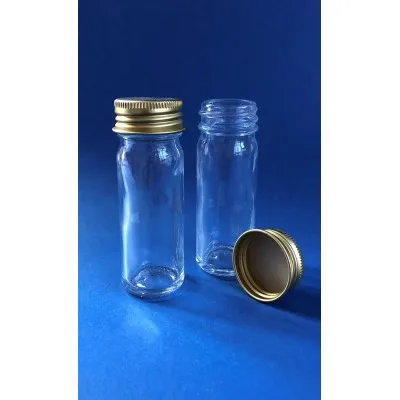
7ml Bijou container (no label, sterile)

Greiner Bio-One

7ml Bijou container (no label, sterile)

Quantity

  • 7ml Bijou container
  • No label
  • Sterile
  • Quantity per bag: 700
Go to Product Description

ASK A QUESTION

Please fill in the form below to ask a question about this product:

  100% Secure Shopping

100% Secure Shopping & Payment Gateway

  Express Delivery

We aim to ship all stocked items within 1-3 working days.

  Hassle Free Returns

Not 100% happy with your order? find out more about our returns policy.

  • 7ml Bijou container
  • No label
  • Sterile
  • Quantity per bag: 700
G189171

Our standard delivery is 3-5 working days (where products are available) Monday to Friday, excluding public holidays when you order by 2pm. Details of our returns and cancellation policy can be found in our Returns Policy & Section 11 of our Terms and Conditions. For more information please contact us on 01924 444 577 or Email Us.

16 other products in the same category:

PO Plate count and OGYE agar Dipslides

£10.09 vat excl.

£12.11 vat Inc.

Availability: 50 In Stock
  • Slide Format: Large Pushfit
  • Agar (Side 1): Plate Count 
  • Detection (Side 1): Total Count
  • Agar (Side 2): Ogye
  • Detection (Side 2): Yeast And Moulds
  • Shelf Life: 6 Months
  • Storage Temp.: 8 - 15 C
  • Incubation: 22 C - 24 - 120 Hrs
  • 10 Dipslides per box
  • Minimum Order Quantity: 1 box

Sorbitol MacConkey Agar

£891.93 vat excl.

£1,070.32 vat Inc.

Availability: Out of stock
Sorbitol MacConkey Agar is used for the isolation of pathogenic Escherichia coli in a laboratory setting. Sorbitol MacConkey Agar is not intended for use in the diagnosis of disease or other conditions in humans. Sorbitol MacConkey Agar is based on the formula by Rappaport and Henig. Originally developed for isolating enteropathogenic (EPEC) serotypes, O11 and O55, this medium is recommended for the isolation and differentiation of enterohemorrhagic E. coli O157:H7. Serotype O157 has been implicated in serious foodborne diseases. MacConkey Agar W/ Sorbitol contains sorbitol instead of lactose for differentiating enteropathogenic E. coli serotypes; these strains are typically sorbitol negative. MacConkey Agar W/ Sorbitol is recommended for food testing. Enzymatic Digest of Gelatin, Enzymatic Digest of Casein, and Enzymatic Digest of Animal Tissue are the nitrogen and vitamin sources in MacConkey Agar W/ Sorbitol. Sorbitol is the fermentable carbohydrate; typically enteropathogenic strains produce colorless colonies. Bile Salts Mixture and Crystal Violet are the selective agents, inhibiting Gram-positive cocci. Sodium Chloride maintains the osmotic environment, and Neutral Red is the pH indicator. Agar is the solidifying agent. The selectivity of the medium can be increased through the addition of Cefixime and tellurite.
Availability: Out of stock
Tetrathionate (TT) Broth Base, Hajna is used as a selective enrichment for the cultivation of Salmonella species (except S. typhi) from samples in a laboratory setting. Tetrathionate (TT) Broth Base, Hajna is not intended for use in the diagnosis of disease or other conditions in humans. Tetrathionate Broth Base, Hajna, is recommended in the Compendium of Methods for the Microbiological Examination of Foods and the FDA/BAM for the Environmental Sampling and Detection of Salmonella Enteritidis (SE) in Poultry Houses and whole eggs.. Salmonella organisms may be present but injured in food-processing procedures, which include exposure to low temperatures, sub-marginal heat, drying, radiation, preservative, and sanitisers. Numerous reported cases of Salmonella enteritidis (SE) infections are associated with contaminated shell eggs. SE infections can be very serious and symptoms can include diarrhea, fever, abdominal cramps, headache, nausea and vomiting. Eggs can become contaminated on the farm because a laying hen can become infected with SE and pass the bacteria into the egg before it is laid. If the egg is not refrigerated, the bacteria can grow inside the uncracked, whole egg. Tetrathionate Broth Base, Hajna was developed by Hajna and Damon.

Foodproof Reagent P

£185.90 vat excl.

£223.08 vat Inc.

Availability: Out of stock

The foodproof Reagent P, designed for automated DNA isolation, works with foodproof Magnetic Preparation Kit I on RoboPrep Series workstations to extract gram-negative bacterial DNA from protein-rich food enrichment cultures. This specialised protein reagent optimizes cell lysis and DNA binding to magnetic beads, making it essential for processing samples like egg, ham, beef, pork, chicken, minced meat, salmon, and cheese. With 550 isolations per kit, it delivers high-quality DNA suitable for PCR applications, streamlining bacterial detection workflows in food safety testing laboratories.

Neogen® Swab-Sampler with DE Neutralising Broth

£108.58 vat excl.

£130.30 vat Inc.

Availability: Out of stock

Neogen® Swab-Sampler with 10 mL D/E Neutralising Broth is a convenient and quick collection device for environmental sampling and testing over small surface areas.

Sample collection is easy with Neogen® Swab-Samplers. The vial provides ample headspace for sample addition and vortexing to release organisms from the swab. In addition, this sampling device is decontaminated through gamma irradiation for long shelf life. The Hazard Analysis Critical Control Point (HACCP) approach is the most widely accepted food safety management protocol worldwide. Sample collection products from Neogen® are a crucial part of this approach to identify potential food-borne hazards and pinpoint where they reside. Portability, stable enrichment media, and easy-to-handle swabs and sponges are designed to test for a wide variety of potential hazards and deliver exceptionally accurate results. They are engineered to safely gather, hold, and secure contents from the collection site to the lab without leaking or compromising the sample.

D/E Neutralising Broth, developed by Dey and Engley, is used in disinfectant testing where neutralization of the antiseptics and disinfectants is important for determining its bactericidal activity. It is effective for neutralising a broad spectrum of disinfectants and preservative antimicrobial chemicals, such as ammonium compounds, phenolics, iodine, chlorine preparations, mercurials, formaldehyde, and glutaraldehyde. D/E Neutralising media will neutralize higher concentrations of residual antimicrobials than other standard neutralising formulations, such as Letheen media, Thioglycollate media, and Neutralising Buffe