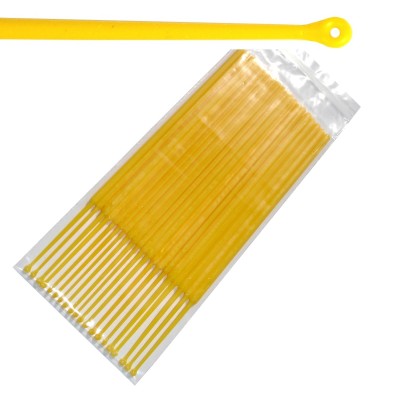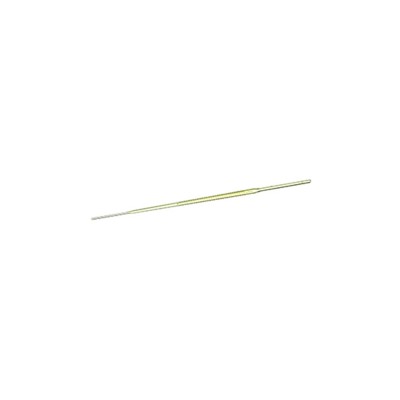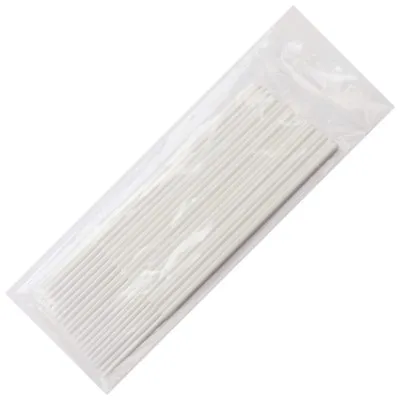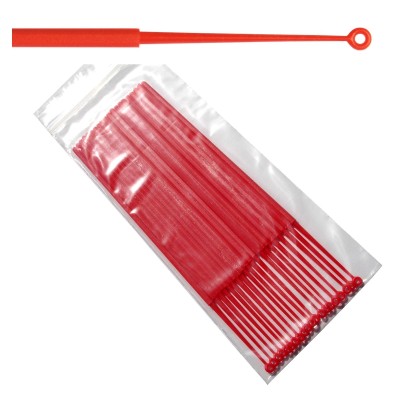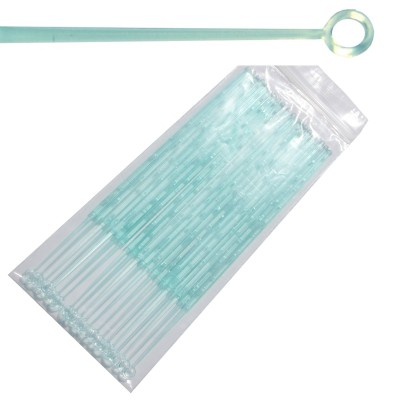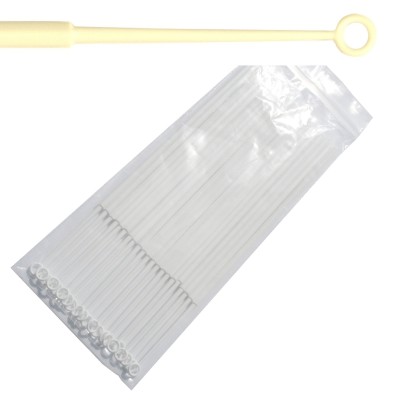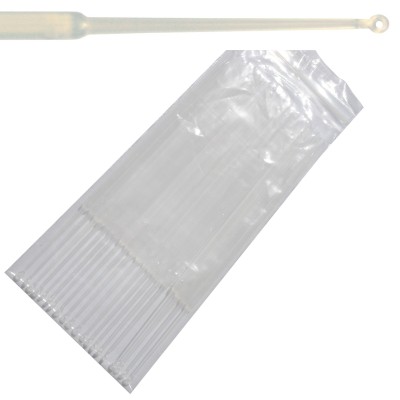


1µl Clear Sterile Disposable Plastic Inoculating Loops

TSC

1µl Clear Sterile Disposable Plastic Inoculating Loops

1µl
Quantity

  • Inoculating Loops - 1µl Clear Firm Inoculating Loops, 20 Per Bag.
  • Ideal for heavily contaminated or clinical samples
  • Pack size: 1000 loops
Go to Product Description

ASK A QUESTION

Please fill in the form below to ask a question about this product:

  100% Secure Shopping

100% Secure Shopping & Payment Gateway

  Express Delivery

We aim to ship all stocked items within 1-3 working days.

  Hassle Free Returns

Not 100% happy with your order? find out more about our returns policy.

Inoculating Loops, 1µl Clear Firm, 20 Per Bag. Recommended for quick and accurate throughput of samples

  • noculating Loops - 1µl Clear Firm Inoculating Loops, 20 Per Bag.
  • Ideal for heavily contaminated or clinical samples
  • Pack size: 1000 loops

Known Limitations:

Laboratory use only

Shelf Life: 3 years

Sterilisation Method: Gamma Irradiation to achieve a SAL of 10-6

TS-TS/4-A

Our standard delivery is 3-5 working days (where products are available) Monday to Friday, excluding public holidays when you order by 2pm. Details of our returns and cancellation policy can be found in our Returns Policy & Section 11 of our Terms and Conditions. For more information please contact us on 01924 444 577 or Email Us.

16 other products in the same category:

Availability: 50 In Stock
  • Slide Format: Large Pushfit
  • Agar (Side 1): Plate Count + Neutralisers + Ttc
  • Detection (Side 1): Total Count
  • Agar (Side 2): Plate Count + Neutralisers + Ttc
  • Detection (Side 2): Total Count
  • Shelf Life: 6 Months
  • Storage Temp.: 8 - 15 C
  • Incubation: 35 C - 24 - 48 Hrs
  • 10 Dipslides per box
  • Minimum Order Quantity: 10 boxes
Availability: Out of stock
Buffered Listeria Enrichment Broth Base is used with supplements for selective enrichment of Listeria spp. in foods and is not intended for use in the diagnosis of human disease. Listeria monocytogenes, described first in 1926 by Murray, Webb, and Swann, is an extensive problem in public health and food industries. This organism has the ability to cause human illness and death, particularly in immunocompromised individuals and pregnant women. Epidemiological evidence from outbreaks of listeriosis has indicated that the principle route of transmission is via consumption of foodstuffs contaminated with Listeria monocytogenes. Implicated vehicles of transmission include turkey, frankfurters, coleslaw, pasteurized milk, Mexican style cheese, and pate. Buffered Listeria Enrichment Broth, a modification of the formula by Lovett et al. was developed after research concluded that enrichment properties can be improved by increasing the buffering capacity of the medium with the addition of disodium phosphate. BLEB Base is based upon the FDA/BAM recommendations where the medium is supplemented with selective agents after an initial four hour, non-selective, pre-enrichment.

Lauryl Sulfate Broth

£519.48 vat excl.

£623.38 vat Inc.

Availability: Out of stock
Lauryl Sulfate Broth is used for the detection of coliform bacteria in water and wastewater in a laboratory setting. Lauryl Sulfate Broth is not intended for use in the diagnosis of disease or other conditions in humans. The coliform group of bacteria includes aerobic and facultative anaerobic, Gram-negative, non-sporeforming bacilli that ferment lactose and form acid and gas at 35°C within 48 hours. Members of the Enterobacteriacae comprise the majority of this group, but organisms such as Aeromonas spp. may also be included. Procedures to detect and confirm coliforms are used in testing water, foods, dairy products, and other materials. Lauryl Sulfate Broth, also referred to as Lauryl Tryptose Broth, is prepared according to the formula of Mallmann and Darby. During their investigation, Sodium Lauryl Sulfate produced the best results for inhibition of organisms other than coliforms. Lauryl Sulfate Broth, abbreviated as LSB, is used in the presumptive phase of the Standard Total Coliform Fermentation Technique in the examination of water, and coliform detection of foods.

Glucose (Dextrose)

£656.21 vat excl.

£787.45 vat Inc.

Availability: Out of stock
Glucose is a fermentable carbohydrate and is used when preparing microbiological culture media in a laboratory setting. Glucose is not intended for use in the diagnosis of disease or other conditions in humans. Glucose is a fermentable carbohydrate which acts as an energy source in culture media.

MacConkey Agar No. 3

£2,142.21 vat excl.

£2,570.65 vat Inc.

Availability: Out of stock
MacConkey Agar No. 3 is used for the cultivation of Enterobacteriaceae. A modification recommended by the W.H.O. and the American Public Health Association for the isolation of Enterobacteriaceae from waters and sewage.
Availability: Out of stock
  • 50ml Centrifuge tube, conical base, bagged, sterile
  • Sterile
  • Polypropylene displays high thermal, mechanical and chemical resistance. It is therefore recommended for the storage of chemical and biological samples
  • Blue screw cap
  • Blue graduation and white writing area
  • Polypropylene tubes with Cat.-No. 188 261 /188 271 / 227 261 / 227 270 meet the pressure requirements for transportation by aircraft. Hydrostatic pressure testing was performed according to the ICAO. IATA DGR guidelines. A certificate of conformity may be provided on request.
  • Quantity: 500

TT2 CLED and MacConkey (w/o salt) Agar Dipslides

£11.69 vat excl.

£14.03 vat Inc.

Availability: 34 In Stock
  • Slide Format: Large Pushfit
  • Agar (Side 1): Cled
  • Detection (Side 1): Total Count 
  • Agar (Side 2): Mac Conkey W/O Salt
  • Detection (Side 2): Coliforms
  • Shelf Life: 9 Months
  • Storage Temp.: 8 - 15 ℃
  • Incubation: 35 ℃ - 24 - 48 Hrs
  • 10 Dipslides per box
  • Minimum Order Quantity: 50 box

Yeast & Mold Agar

£808.37 vat excl.

£970.04 vat Inc.

Availability: Out of stock
Yeast and Mold Agar is recommended for the isolation and maintenance of yeasts and molds. This medium can also be used for the detection of wild yeasts in beer. Yeast and Mold Agar is not intended for use in the diagnosis of disease or other conditions in humans. Yeast and Mold Agar is prepared according to the formulation published by Wickerham and was formulated for the selective isolation of yeasts from mixed cultures containing bacteria and molds. The selectivity of this medium may be enhanced through acidification or through addition of selective agents. Yeast and Mold Agar should be sterilized without pH adjustment and sterile acid added to the medium cooled to 45 - 50°C. Acidified Yeast and Mold Agar should not be heated. Antibiotics may be aseptically added to sterile media. Other fungistatic materials may also be added to Yeast and Mold Agar to eliminate molds and permit enumeration of yeasts to mixed populations.